


From there, both science which is in charge of investigating thermal phenomena which occur inside the Earth and the set of industrial processes that intend to take advantage of that heat in order to produce electric energy or heat energy could both be called geothermics.
Geothermics is therefore a renewal energy that exploits heat from the subsoil so it can generate electric energy in an environmentally responsible manner.
A bit of history of geothermics.
Before going into detail, we would like to mention François de Larderel. Considered as “The father of Geothermics”, he managed to create the first system capable of turning steam from the ground water into energy. This occurred in the volcanic region of Landerello in 1827. His concern over tree burning and deforestation which came about in the region of Toscana, led to the discovery of this alternative source of energy.
In 1948, the first geothermic heat pump was installed in the Common Wealth building in Portland (Oregon). Known as Equitable Building¸ it was a modern construction that became pioneer in that time and meant a great breakthrough considering clean energy installations.
Nonetheless, it was not until 1973 when geothermal energy use became really popular among countries like Germany, Canada, England, Sweden or US as they started to boost geothermic heat pumps over solid fuel.
Nowadays, geothermal energy is widely used and ,volcanic regions like Iceland highly depend on it with 95% of their population having a heating system which works through a massive pipeline network which carries hot water around from the subsoil.
Use of geothermics in climate control. Geothermal heat pumps.
Technically, geothermal energy has great potential since it can be used in both massive constructions with great energy requirements such as hospitals, hotels and offices as well as in constructions with lower energy consumption: single-family homes for instance.
It could be stated that there are two main geothermal energy exploitation systems:
- Sources of high temperature: over 150º Celsius used to generate electric energy
- Sources of low temperature: less than 150º Celsius, used directly as energy and also through heat pumps, even under 20º Celsius.
Geothermal heat pumps case is going to be analysed in this case:
It is a system that provides comfort all the year round since it is used as a heating system in winter and air conditioning in summer besides the fact that it is achieved in a clean and environmentally friendly manner.
However, how do the geothermal heat pumps work?
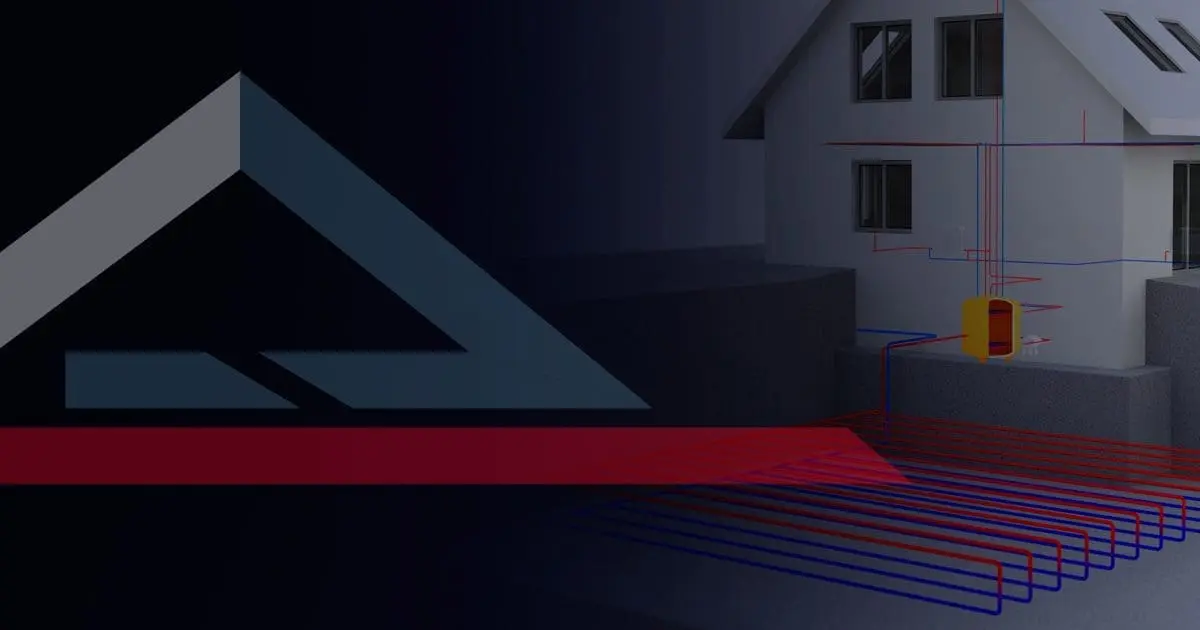
A geothermal installation for climate control has three main components:
- Exchange circuit with the subsoil
- Geothermal heat pump
- Exchange circuit with the house
In winter, the piping network along with the heat pump captures geothermal heat from the interior of the Earth and sends it to the interior of the building.
In summer though, the process goes the other way round so heat is transported from the building to the subsoil.
Geothermics might seemingly have a fundamental advantage over solar energy absorption climatisation systems: it does not require great batteries to compensate dark hours. It is indeed the Earth the one which works as a natural accumulator as it keeps a constant temperature.
Geothermal climate control system performance is much better than a conventional climatisation system (natural gas, propane, fuel-gasoil…). It can actually reach between 30% and 75% lower consumption levels than other sources of energy.
Furthermore, although it normally requires a bigger initial investment, its efficiency makes a return on investments approximately between 3-5 years. In the long run, there is a bigger economic save due to low levels of energy consumption and maintenance costs.
Were you aware of the geothermal heat pumps? Do you know any installation where geothermics has been used as a source of energy?
Feel free to comment and leave a post!
[rscontentoffer